The best hair color usually looks less like a trend name and more like a quiet agreement between your skin, eyes, natural roots, and wardrobe. This guide uses Soft Summer as the starting point, but it keeps the decision practical: what the shade does to your face in normal daylight, how it behaves with clothes, and whether the upkeep matches real life.
Use the keywords behind this topic as a search map, not as a script to repeat. People looking for soft summer hair color, soft summer hair colors, muted hair color usually want a clear answer, but hair color analysis works best when shade family, depth, temperature, and contrast are checked together.
Start with softness and blended color instead of a salon trend name
For Soft Summer, the first useful question is not whether a color is fashionable. Ask whether the shade makes the skin look calmer, the eyes more defined, and the face less tired. A color can be technically beautiful and still be wrong if it adds yellow shadows, exaggerates redness, or makes the features look disconnected from the hair.
A good muted neutral-cool palette keeps three things in balance. Temperature describes whether the color leans cool, warm, or neutral. Value describes how light or dark it is compared with your natural coloring. Chroma describes how clean, bright, smoky, or muted the shade looks. Most bad hair color decisions happen when one of those three is ignored.
When you collect reference photos, sort them by effect instead of celebrity name. Save examples where the skin looks even, the brows still make sense, and the person could wear the shade with simple clothes. Delete examples where heavy makeup, studio lighting, or editing is doing most of the work.
Read the natural clues before changing the formula
Look at your natural root depth, eyebrow color, eye pattern, and the colors already hanging in your closet. If your best clothes are soft navy, rose, sage, dusty blue, or gentle gray, a sharp orange copper may fight the rest of the palette even when the salon photo looks exciting. If your best clothes are black, optic white, cobalt, and clear red, a very muted beige can make the whole face look underpowered.
Undertone tests are helpful, but they are not perfect. Veins, jewelry, and foundation labels can contradict each other. A steadier test is to compare two controlled hair directions near the face: one cooler and one warmer, one softer and one clearer, one lighter and one deeper. The winning direction usually makes blemishes quieter and the eye color more specific.
For many people, the natural root is the anchor. A root shadow that stays close to your real depth can make blonde, brunette, or red shades look intentional. A root that is too dark can create a stripe. A root that is too light can make brows look heavy and skin look washed out.
Shade families that usually deserve a test
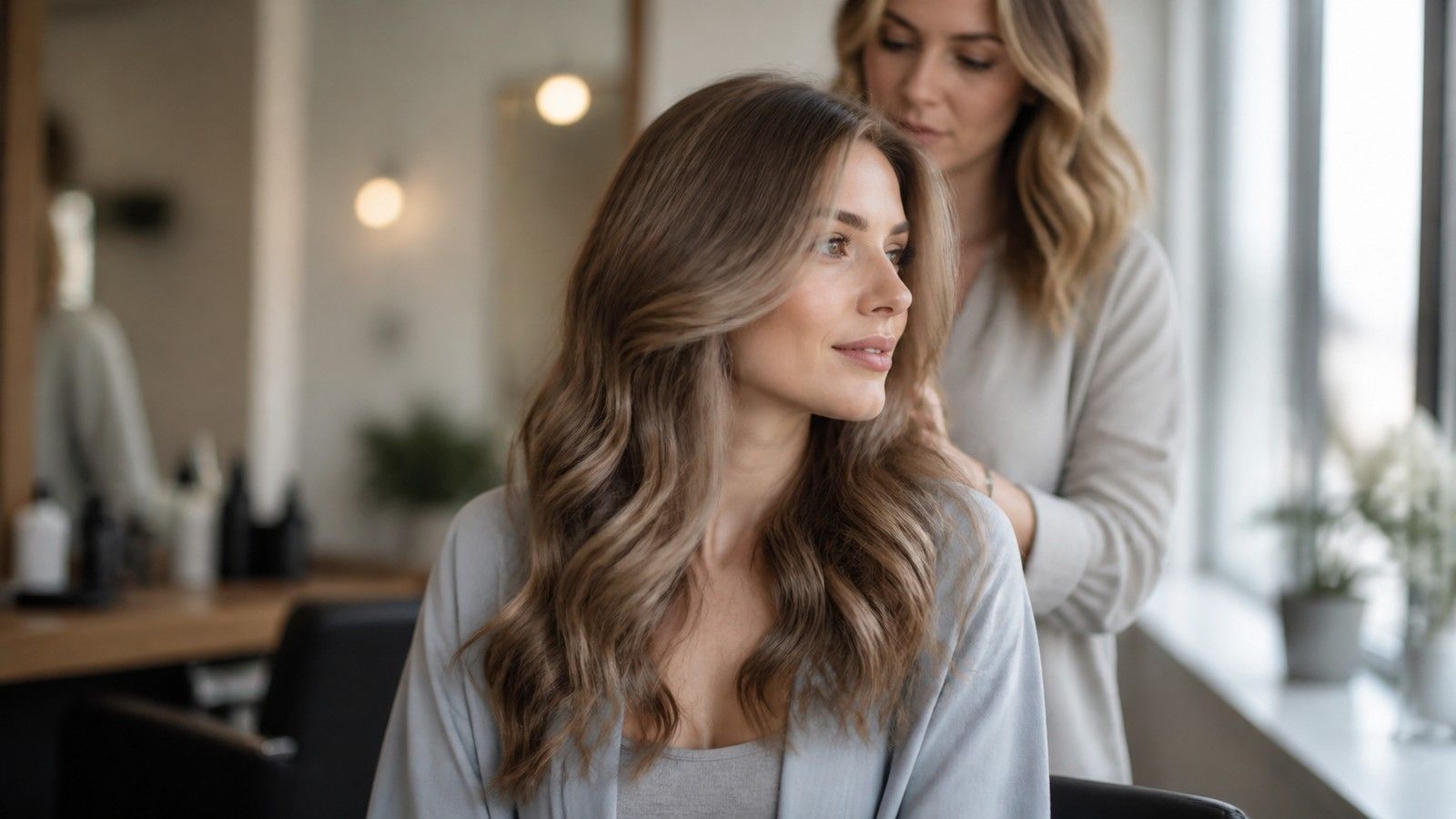
In this topic, the safest shortlist includes muted ash brown, dark blonde, dusty beige, soft mocha. These are not rigid prescriptions. Think of them as directions to test with a stylist, a wig, a virtual try-on, or temporary gloss. The best version often sits between two labels: ash beige rather than silver, smoky brown rather than flat black, soft copper beige rather than bright orange.
| Direction | Best when it helps | Watch for |
|---|---|---|
| Cooler shade | Redness calms down and eyes look cleaner | Can become dull if the formula is too gray |
| Softer shade | Features look blended and expensive | Can look flat without gloss or dimension |
| Deeper shade | Brows, lashes, and eyes need more structure | Can overwhelm low-contrast coloring |
| Lighter shade | The face looks fresher and less shadowed | Can expose brass, dryness, and root upkeep |
If you are between two options, choose the one that looks believable at the root. Hair color has to survive movement, regrowth, and imperfect lighting. A shade that only works in a front-facing edited photo is not the best shade for daily wear.
How to use virtual try-on without being fooled
A virtual hair color try-on can be useful for direction, especially when comparing blonde, brunette, red, and black families. It is less reliable as a final formula. The preview may ignore your natural warmth, flatten texture, paint over flyaways, or make the skin look smoother than it is. Treat it as a sketch, not as chemistry.
Use one clear daylight photo with no beauty filter, one indoor photo, and one pulled-back photo where the roots and brows are visible. Test the same shade family at two depths. If a color only works in one photo, it may be reacting to lighting rather than your actual coloring.
The best digital check is comparison. Put your current hair, a slightly cooler option, a slightly warmer option, a softer option, and a deeper option side by side. Then ignore the most dramatic change for a minute and ask which version makes the face easiest to read.
Salon conversation notes
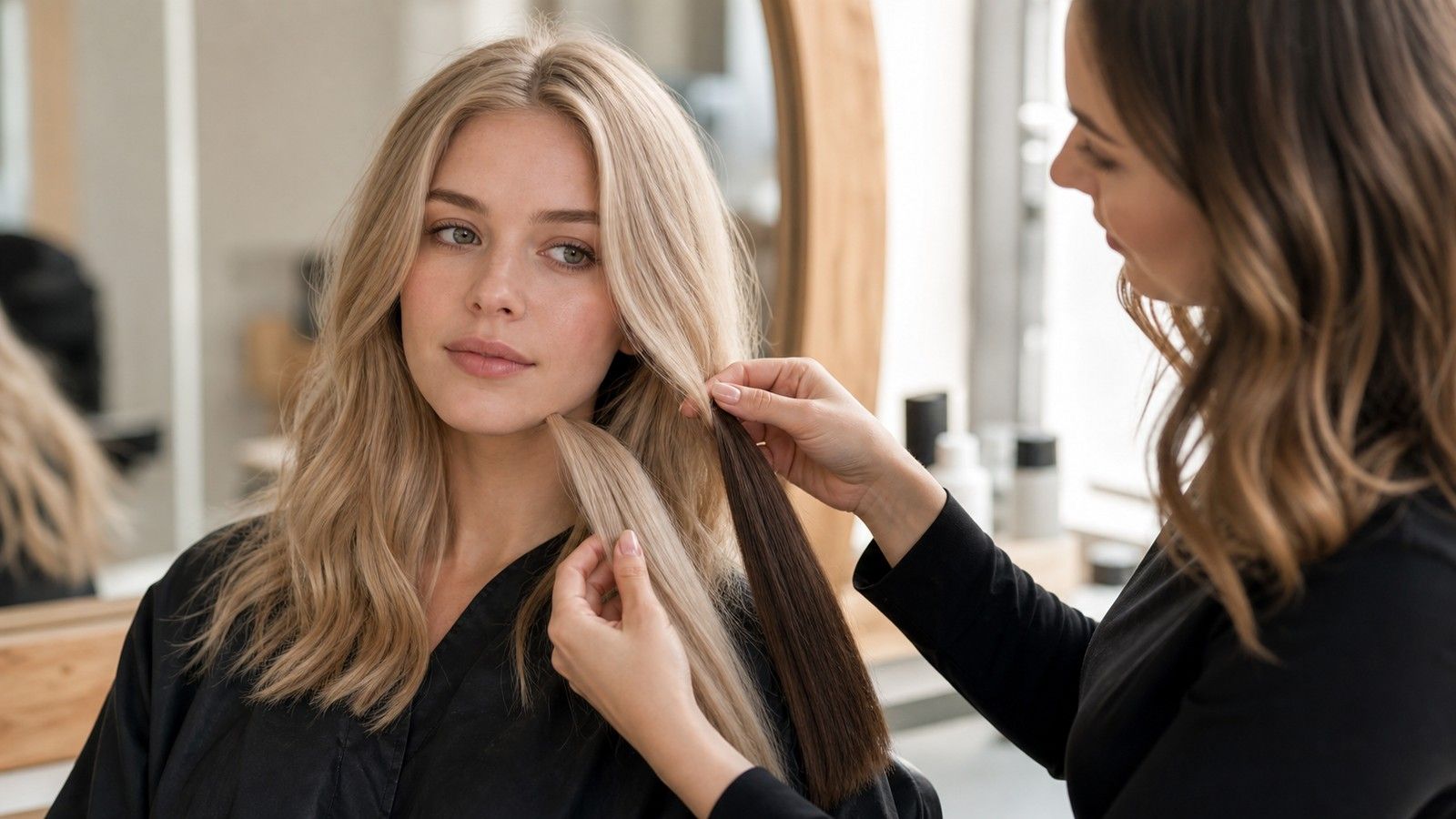
Bring a short brief instead of a pile of unrelated screenshots. Say what you want the color to do: soften contrast, cool brass, keep brightness near the face, blend grays, or make pale skin look clearer. Mention the clothes and makeup colors that usually work on you. A stylist can translate that into level, reflect, placement, and maintenance.
Useful words include gloss, demi permanent, root melt, lowlight, face frame, beige ash, neutral cool, soft brunette, pearl blonde, mushroom brown, and violet brown. Less useful words are just expensive, natural, trendy, or clean. Those can mean very different formulas in different salons.
Ask how the color will fade. A cool brunette can fade red. A beige blonde can fade yellow. A soft copper can become too orange. Maintenance is part of color analysis because a shade that only looks right for seven days is not really your best color.
Clothes and makeup are the final proof
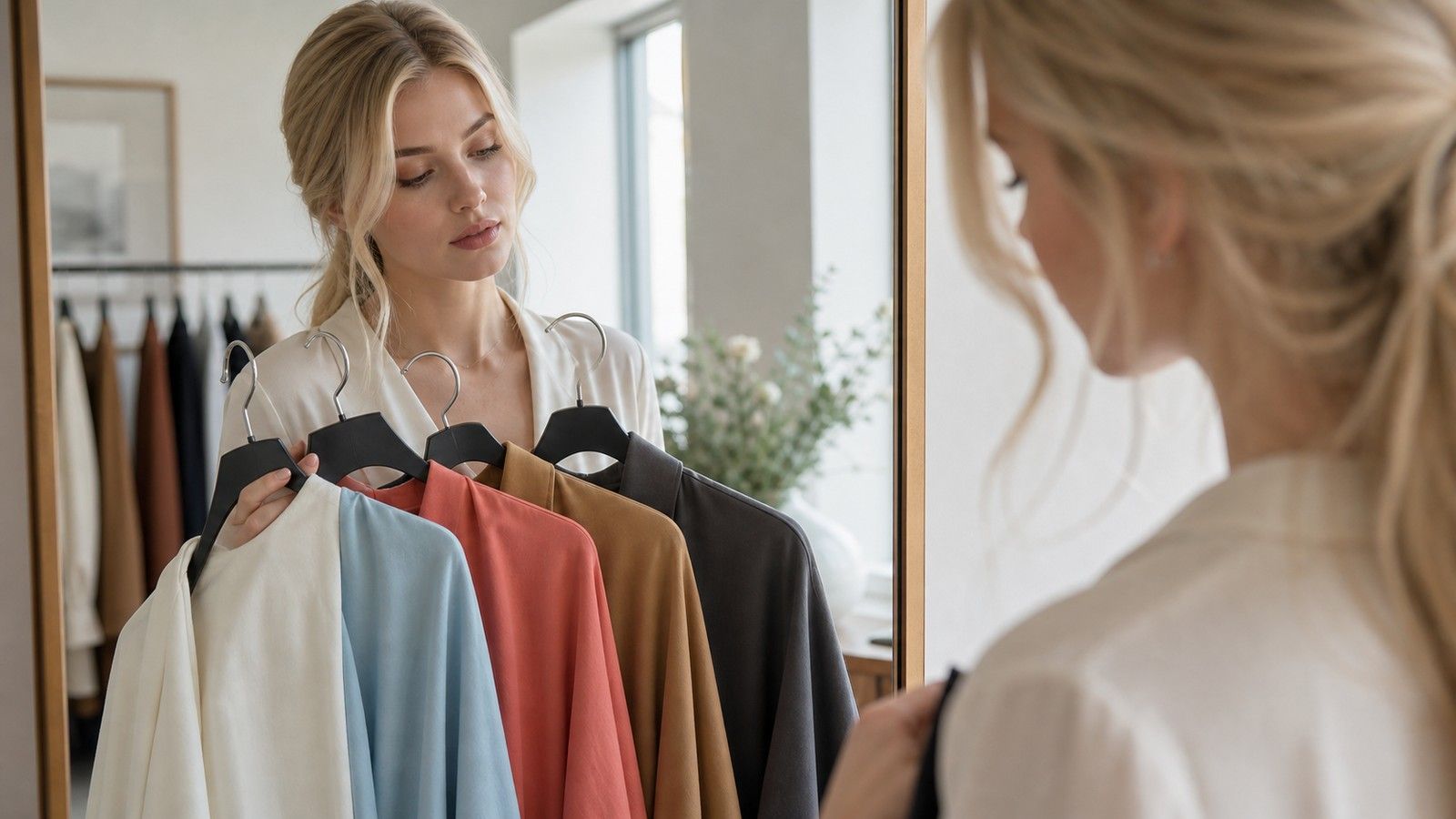
After testing hair color, repeat the shade with your wardrobe. Try your best neutral, your best blue or green, one pink or red, and one white or cream. The right hair direction usually makes more of your closet work, not less. If you suddenly need heavier makeup with every outfit, the shade may be too strong, too warm, too cool, or too light.
For blonde hair and fair skin, the difference between ivory, cream, pale gray, and optic white matters. For brunette hair, the difference between black, charcoal, navy, and espresso matters. For red hair, the difference between tomato, rust, rose, and burgundy matters. Hair color analysis is most convincing when it improves these everyday choices.
A practical final test is the low-effort day. Wear simple clothes, minimal makeup, and normal lighting. If the hair still makes the face look intentional, the shade is probably close. If it needs constant styling, tanning, or a full makeup routine to make sense, adjust the depth, temperature, or softness before committing again.
Common mistakes to avoid
Avoid icy platinum as the only cool option. Also avoid choosing a shade because it solved a different person's problem. A cool summer may need softness more than darkness. A cool winter may need clarity more than ash. A pale blonde may need contrast from clothing rather than darker hair. A virtual preview may need validation in daylight before it deserves trust.
Do not confuse low maintenance with no maintenance. Even subtle color needs a plan for brass, shine, root growth, and dryness. If the shade is close to your natural palette, maintenance can be calm. If it pushes far from your natural value or undertone, the upkeep becomes part of the look.
The best hair color is not always the one people notice first. Often it is the one that makes your eyes, skin, clothes, and personal style look more resolved. Start with analysis, test the direction, then let the salon formula be precise.