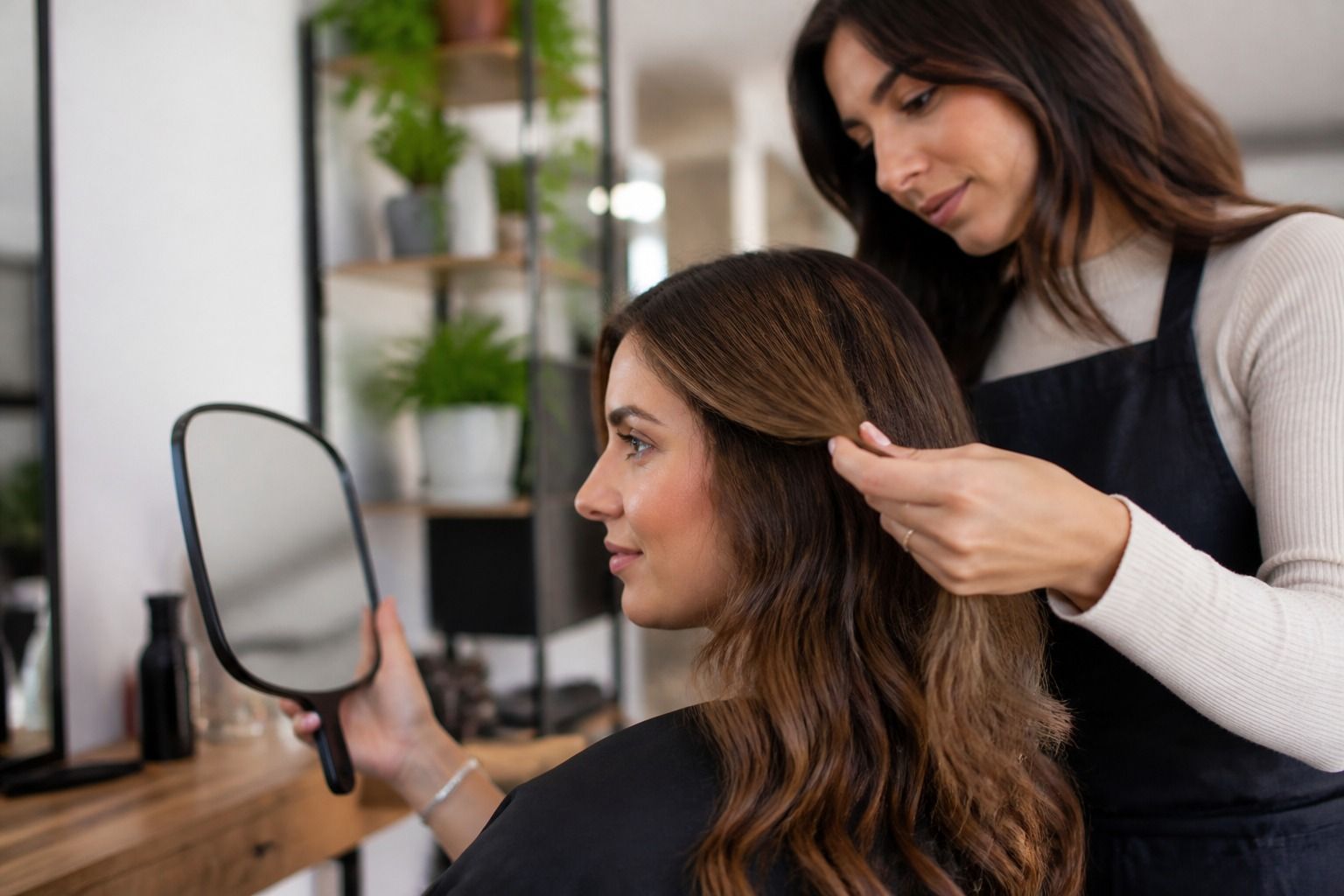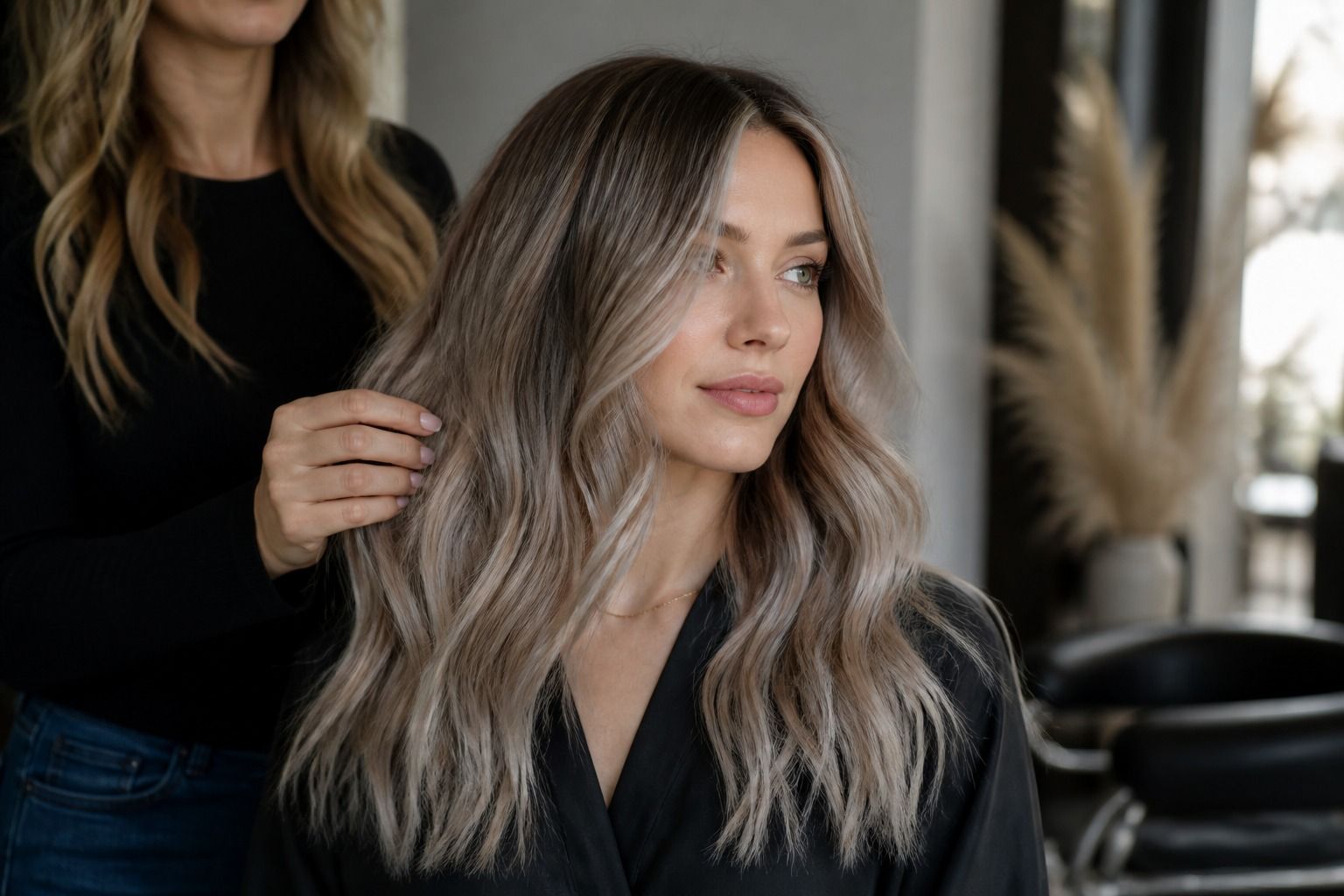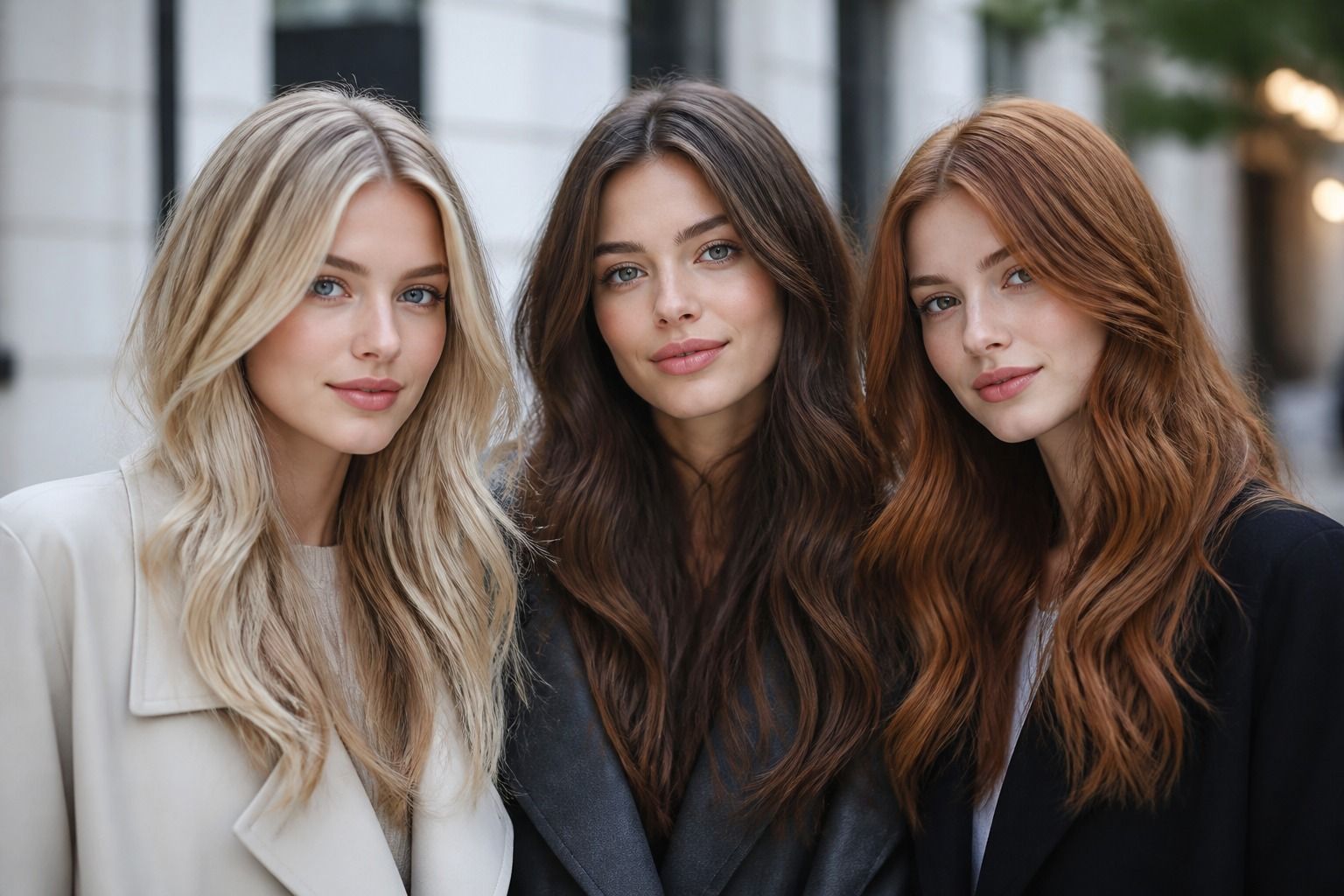
The mistake I see most often is choosing the prettiest example instead of the most believable direction. Hair color sits beside the face all day, so undertone and contrast matter more than the name printed on a salon swatch. This guide keeps the focus on best hair color for cool summer: undertone, depth, reflection, contrast, and the salon choices that make the shade wearable after the first wash.
Start with the hair you already have
Natural hair depth is the best first clue because it shows how much contrast the face can carry without extra effort. Look at the root in indirect daylight, not under a salon lamp or a bathroom bulb. A level-six brown with a cool cast behaves differently from a level-six brown with copper warmth, even when both are called brunette.
Check undertone without overthinking it
Undertone is easier to read when you stop hunting for a perfect label. Hold the hair away from the face, stand near a window, and compare how the skin reacts to cool gray, soft beige, muted rose, and clean ivory. The right direction usually makes redness quieter and the eyes clearer; the wrong one makes the face look separate from the hair.
Warmth is not automatically bad and ash is not automatically smart. Some fair skin needs a small beige reflection so blonde does not turn flat. Some cool skin can handle a little neutral brown but falls apart with orange copper. The point is to find the temperature range, then choose the shade inside that range.
For Best Hair Color for Cool Summer, I would watch the shadows around the mouth and under the eyes. If a test shade makes those shadows look heavier, the problem may be temperature, depth, or too much contrast rather than the shade family itself.
Use contrast as the quiet filter
Contrast decides how much drama the hair can carry. Low-contrast coloring often looks better with softened edges: beige ash, mushroom brown, muted highlights, or a root shadow that keeps everything blended. High-contrast coloring can support cleaner dark shades, brighter cool blondes, or a sharper face frame.
The quickest test is to squint at a daylight photo. If the face, eyes, brows, and hair all sit in a gentle value range, a high-contrast dye job can steal the face. If the brows and eyes are naturally strong, hair that is too muted may look dusty, even when the undertone is technically correct.
This is why cool summer hair color and cool summer hair colors should not be treated as the same problem. One person may need softness; another may need clarity. The salon formula can be similar on paper but the placement, gloss, and root depth need to change.
Compare options before choosing
A comparison works only when the options are judged by the same rules. Put each shade against undertone, contrast, root depth, and maintenance. The prettiest swatch can lose if it needs constant correction or makes the face depend on makeup.
I would separate color families into three groups: easy, possible with planning, and likely to fight the face. Easy shades echo the natural coloring. Possible shades need careful placement or gloss. Fighting shades demand a new wardrobe, stronger makeup, or frequent salon rescue.
That simple sorting keeps best hair color for cool summer from turning into a random list. The right choice becomes the shade that gives enough change without making every other color decision harder.
Talk to the colorist in useful words
Salon language works better when it is concrete. Bring one reference for temperature, one for depth, and one for placement. Then say what you do not want: orange warmth, gray flatness, stripy highlights, a hard grow-out line, or a shade that demands heavy makeup.
Ask about toner life before the color is mixed. Cool and muted shades often depend on gloss maintenance, especially on porous ends. A beautiful ash beige can turn yellow if the lift is uneven, while a brunette gloss can go warm if the underlying pigment was not considered.
For Best Hair Color for Cool Summer, the safer conversation is about range rather than a single miracle shade. A colorist can adjust depth, reflect, and placement once they understand whether the goal is softer skin, clearer eyes, lower maintenance, or better wardrobe harmony.
Avoid the common wrong turn
The wrong turn is usually an overcorrection. Someone who feels yellow asks for very ashy hair and ends up looking gray. Someone who feels pale asks for warm gold and suddenly the face looks red. Someone who wants dimension gets too many bright pieces around the face and loses the softness that made the palette work.
Before changing everything, test the smallest version of the idea: a gloss, a few face-framing pieces, a slightly cooler toner, or a deeper root. Big transformations are easier to photograph, but small adjustments often solve the actual color-analysis problem.
If a shade only works with perfect lighting, heavy bronzer, and a black top, it may not be the best everyday direction. Hair color has to survive plain clothes, tired skin, office light, and the weeks between appointments.
Keep maintenance honest
Maintenance should be part of the color choice, not an apology afterward. Cool blondes need toning, pale highlights need careful shampoo habits, and dark cool brunettes can show warmth at the ends. If the shade is beautiful only on appointment day, the plan is incomplete.
A realistic routine includes how often the roots need attention, whether gloss can refresh the tone, and how the hair looks when it is air-dried. Texture matters too: curls scatter light differently from straight hair, and porous ends can grab ash or lose beige faster than expected.
The best result is not the most dramatic before-and-after. It is the shade that still makes sense after four weeks, in daylight, beside the clothes you actually wear, with the amount of styling you actually do.
| Decision point | Practical check |
|---|---|
| Best first step | Check root depth, skin undertone, and eye contrast in daylight before choosing a dramatic shade. |
| Safer salon request | Ask for a tonal range, placement plan, and toner maintenance rather than one rigid color name. |
| Warning sign | The shade looks good only with strong makeup, filtered photos, or one specific outfit color. |
| Low-risk test | Try gloss, face-frame pieces, or a small shift in reflect before a full transformation. |
Final shade check
Before booking the full service, I would narrow best hair color for cool summer to two realistic directions and one backup. The first direction should feel close to the natural coloring, the second can offer more change, and the backup should be a gloss or placement adjustment that protects the hair if the stronger idea feels risky.
A good final choice makes the face easier to read. Skin looks steadier, eye color has a cleaner edge, and the hair still feels connected to the root when the styling is simple. If the color needs constant explanation, constant toning, or a completely new wardrobe to work, the analysis is probably pointing somewhere quieter.